“THE LIGHT OF THE WORLD ANSWERS OPPOSITION AT THE TEMPLE”
OBJECTIVE:
- John 8:12–20
EXPLORE:
(These are different commentary notes that can be used to explain the context to our students. Feel free to use your own.)
Context / Background / History
Jesus, the Light of the World (John 8:12)
- During the Feast of Tabernacles, light was a central symbol. Large golden lamps were lit in the temple courts, illuminating Jerusalem and reminding Israel of the pillar of fire that led them during the Exodus. Jesus took this powerful image and declared: “I am the light of the world.”
- To follow Jesus is to walk in light, not darkness.“If a man could travel so fast as always to follow the sun, of course he would always be in the light. If the day should ever come when the speed of the railway shall be equal to the speed of the world’s motion, then a man may live so as to never lose the light. Now he that follows Christ shall never walk in darkness.” (Spurgeon)
- The Hebrew Scriptures often described God’s Word as light (Psalm 119:105; Psalm 43:3). Since Jesus is the Word (John 1:1), it makes sense that He is also the Light.
Jesus’ Testimony About Himself (John 8:13–16)
- The Pharisees claimed Jesus’ testimony wasn’t valid. But Jesus declared that His witness was true because He knew His origin and destiny.
- Light doesn’t need defending; it proves itself by shining.
- While the Pharisees judged “according to the flesh,” Jesus’ judgment was perfectly aligned with the Father.
- Jesus stood secure in His identity, a model for believers to rest in who God says they are.
The Father’s Witness (John 8:17–18)
- Jewish law required two witnesses. Jesus presented Himself and the Father as testifying together.
- God the Father bore witness to Jesus’ identity through His works, His Word, and His Spirit.
Knowing the Father (John 8:19–20)
- When asked, “Where is Your Father?” the Pharisees likely mocked Jesus’ birth and questioned His legitimacy. Jesus revealed their real ignorance: though they prided themselves on knowing God, they did not know Him at all.
- Even in the most public place — the temple treasury — no one could arrest Him because His time had not yet come.
RESOURCES:
- Knock off of the chosen John 8 | Jesus Declares: I Am the Light of the World; The Truth Shall Make You Free | The Bible
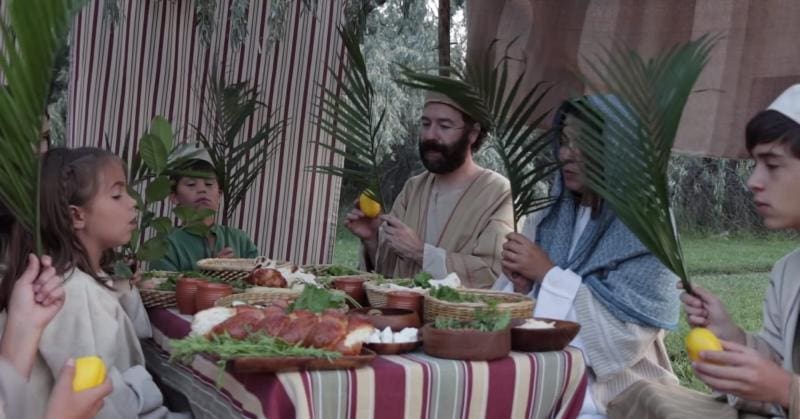
- Background study on the Feast of Tabernacles and temple ceremonies.( The Feast of Tabernacles, also known as Sukkot, is a significant Messianic feast, pointing to the future reign of the Messiah and God's dwelling with His people. It commemorates the Israelites dwelling in temporary shelters after leaving Egypt and anticipates the ultimate fulfillment of God's kingdom. During Sukkot, believers build temporary booths, celebrate the harvest, and rejoice in God's provision, while also looking forward to the time when God will tabernacle with humanity.)
- This year it is Oct 7-14th in multiple locations all over the world celebrated by some christian and jewish denominations.
SMALL GROUP QUESTIONS:
Scripture (S)
- Read together! Encourage students to highlight or make note of anything that stands out to them.
- What details stood out to you in this passage that you hadn’t noticed before?
Observation (O)
- Why do you think Jesus described Himself as “the light of the world” during the Feast of Tabernacles?
- How did His response to the Pharisees show His authority and security in God?
Application (A)
- If Jesus is the light of the world, what areas of your life need His light to drive away darkness?
- How can you reflect His light at school, at home, or in your friendships this week?
Prayer (P)
- Pray for Jesus’ light to shine in your life, exposing and removing any darkness, and ask for boldness to reflect His light to others.

Dusty Bibles
Dusty Bibles is a 7-week small group journey designed to help students encounter Jesus through the Gospel of John. Built around a daily reading plan, each week includes two lessons (Wednesday + Sunday) tied directly to the passages your students are reading. Each lesson comes with context, leader resources, and small group questions to spark discussion. Plus, you’ll get a reading plan, screens, and logos to make the series your own. Invite your students to open their Bibles, dust them off, and discover the life-changing message of Jesus together.
7 Week Small Group Lesson Series.
Full package also available on Dropbox.
