OBJECTIVE:
- John 5:1-15
EXPLORE:
(These are different commentary notes that can be used to explain the context to our students. Feel free to use your own.)
Gospel of John as New Creation
The Gospel of John is often described as a “new Genesis.” Just as Genesis begins with the words “In the beginning,”John also opens with that same phrase, signaling that his story is about new creation. John highlights this theme through his repeated use of the number seven: seven I AM statements, seven Jewish festivals, and most importantly, seven signs, miracles that reveal Jesus’ divine power.
Unlike the Synoptic Gospels, which record many miracles (Luke ~32, Matthew ~27–28, Mark ~28), John is highly selective. He records only seven signs. Why? Because each is chosen not just as an act of compassion, but as a sign pointing to new creation, mirroring the seven days of Genesis.
The Seven Signs of John (Mirroring Creation)
- Water into Wine (John 2:1–11) – Like light breaking into darkness, Jesus brings joy and new life at a wedding.
- Healing the Official’s Son (John 4:43–54) – God spoke creation into being; Jesus speaks life into a dying boy.
- Healing at Bethesda (John 5:1–15) – Where there was barrenness and immobility, Jesus brings fruitfulness and restored life.
- Feeding the 5,000 (John 6:1–14) – As God set lights to govern seasons, Jesus provides bread and reveals Himself as the Bread of Life.
- Walking on Water (John 6:16–24) – God filled the seas with life; Jesus demonstrates His mastery over creation by walking on the waters.
- Healing the Man Born Blind (John 9:1–34) – On the day humanity was created, Jesus restores sight and reveals Himself as the Light of the World.
- Raising Lazarus (John 11:1–44) – On the seventh day God rested; Jesus raises Lazarus, pointing to resurrection and ultimate rest.
The Healing at Bethesda (John 5:1-15)
This story is not just about a paralyzed man being healed after 38 years, it is one of John’s seven signs of new creation.
- The scene is at the pool of Bethesda, where many sick and paralyzed people waited for the waters to stir, believing healing could come through them.
- Their focus was fixed on the water, yet the true source of healing, Jesus, stood among them unnoticed.
- Jesus approached one man and asked: “Do you want to be made well?” This was more than a question about his body; it was a question of his heart. Some grow comfortable in their brokenness or lose hope altogether. Jesus wanted him to confront that reality.
- An eastern beggar often loses a good living by being cured of his disease.” Some simply cannot imagine life any other way. By asking this, Jesus was not only addressing the man’s body but also his heart, which had withered alongside his legs.
- It is possible that Jesus asked this even as the waters were stirred and people started jumping and diving and rolling into the waters, each hoping for evidence that they were the favored one. The man Jesus spoke with knew that he was not one of the favored, and had no real hope to be healed.
STUDENT RESOURCES:
Jesus Heals at the Pool (John 5)
Pool of Bethesda
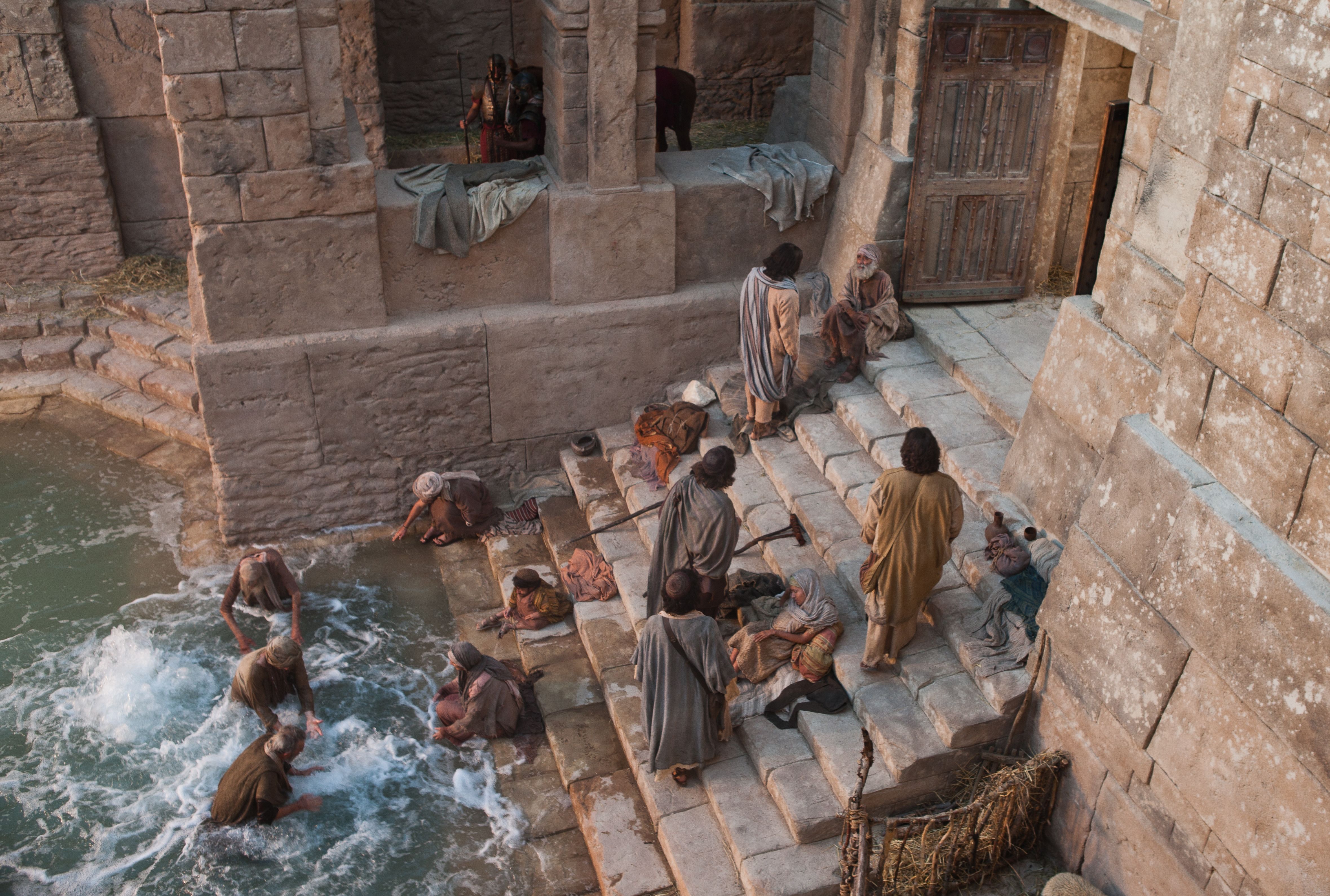
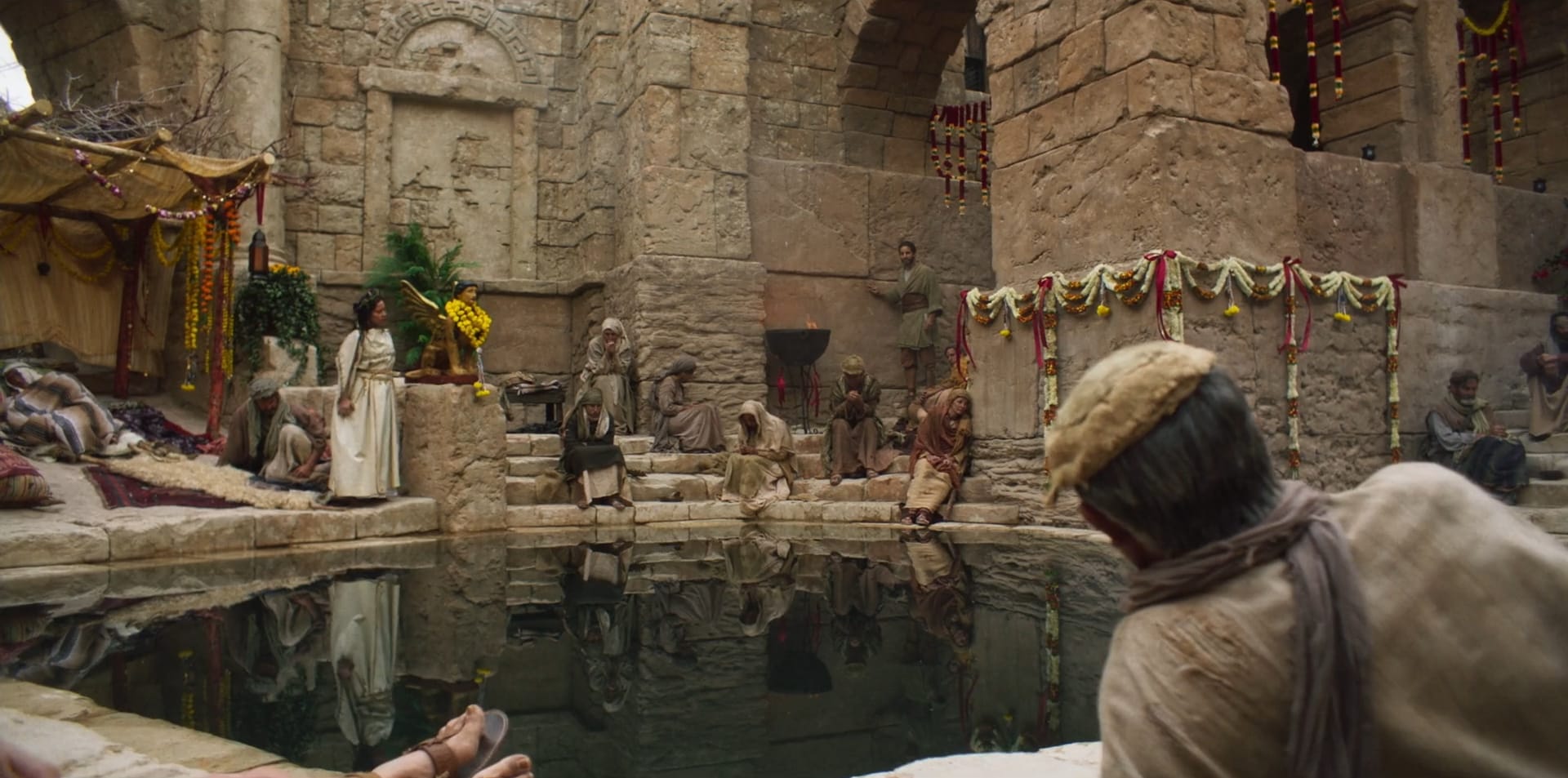
SMALL GROUP QUESTIONS:
Note for Leaders: Please do not teach this section from the platform. Instead, use these thoughts in small groups to help students apply the text for themselves. Small group leaders can receive the text below beforehand. they can use these thoughts to help guide the conversation and encourage students to make personal connections.
- Limited Perspective: The man assumed healing could only come from the pool. We often place our hope in the wrong “pools” (success, people, feelings, circumstances) instead of Jesus.
- The Authority of Jesus: Healing came instantly—not from superstition, but from the authoritative word of Jesus: “Get up! Pick up your mat and walk.”
- Jesus Sees the Forgotten: This man had been overlooked for decades, but Jesus singled him out. None of us are invisible to Him.
- Faith in Action: The man had to act—rise, pick up his mat, and walk. Faith often requires that first step of obedience.
- Big Picture: John shows that this healing is a sign of new creation. Just as God made the earth fruitful in Genesis, Jesus brings movement and life to what was paralyzed and barren.
Scripture (S)
- Read it together! What details stood out to you in this passage that you may not have noticed before? What context provided stood out to you as well?
Observation (O)
- What part of this story stood out most to you, and why?
- Why do you think Jesus asked, “Do you want to be made well?” instead of just healing the man right away?
Application (A)
- If Jesus asked you that same question today, what area of your life would you want Him to make well?
- Where in your life do you need to see God bring fruitfulness?
- What’s one “first step” of faith you could take this week to act on Jesus’ word in your life?
- Are there habits, sins, or ways of thinking that you’ve started to identify with, even though they keep you from growing?
Prayer (P)
- How can we pray for each other to trust Jesus more than the “pools” we look to for help?

Dusty Bibles
Dusty Bibles is a 7-week small group journey designed to help students encounter Jesus through the Gospel of John. Built around a daily reading plan, each week includes two lessons (Wednesday + Sunday) tied directly to the passages your students are reading. Each lesson comes with context, leader resources, and small group questions to spark discussion. Plus, you’ll get a reading plan, screens, and logos to make the series your own. Invite your students to open their Bibles, dust them off, and discover the life-changing message of Jesus together.
7 Week Small Group Lesson Series.
Full package also available on Dropbox.
